


Engraving Options: Fonts, Finishes, and Lasting Legibility
September 15, 2025
Choosing an Epitaph: Words That Last Forever
November 15, 2025
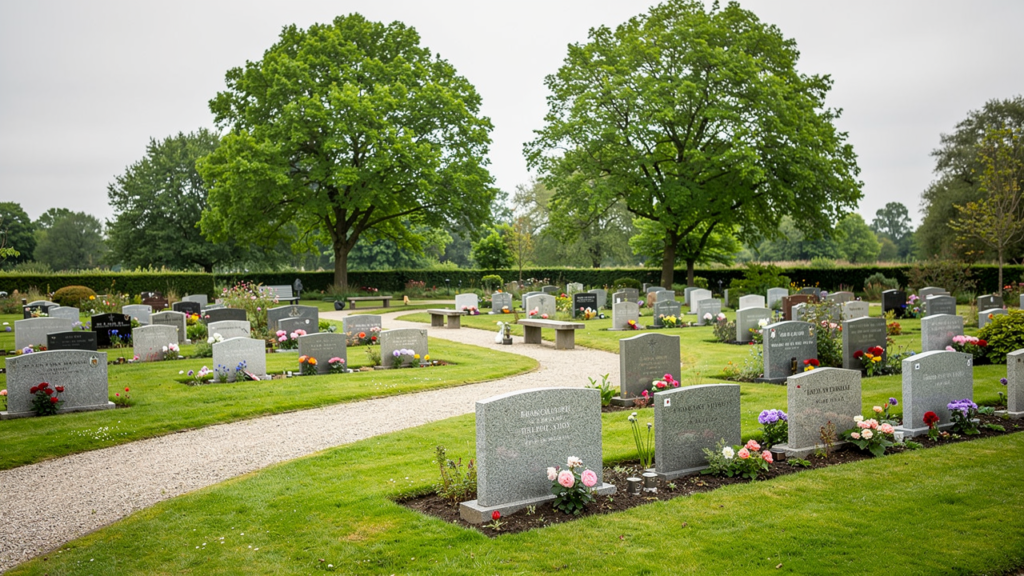
American cemetery design has undergone remarkable transformation over the past two centuries. Understanding this history adds context to the memorials we see today and informs the choices families make for their own.
Early American Burial Grounds
Colonial burial grounds were utilitarian — churchyard plots with simple slate markers, wooden markers that rarely survived, and minimal landscaping. The markers that did survive from this period are often decorated with skulls, hourglasses, and winged death’s-heads — symbols of mortality common to their era.
The Rural Cemetery Movement
In the mid-1800s, the “rural cemetery movement” transformed American attitudes toward burial grounds. Designed as park-like landscapes, cemeteries like Mount Auburn in Cambridge, Massachusetts became destinations for contemplation and recreation. Elaborate Victorian-era monuments — obelisks, draped urns, weeping figures — date from this period.
The Lawn Cemetery
By the early 20th century, the “lawn cemetery” model — uniform, manicured, with standardized marker sizes — became dominant. These cemeteries prioritized ease of maintenance over monument variety, driving the prevalence of flat markers we see today.
Contemporary Design
Today’s memorial options blend historical forms with contemporary personalization technologies. The range available to families now — from traditional upright stones to portrait-etched granite to QR-integrated digital tributes — reflects a generation comfortable with expressing individual identity even in death.
Blackmon Memorials draws on this tradition while offering the full range of contemporary options. Visit us to explore what’s possible.
